

Complex parts rarely move from drawing to finished product through one machine alone. Full-service machining services bring design review, material planning, CNC production, inspection, finishing, and delivery into one coordinated process. That broader support helps manufacturers reduce handoffs, control quality, and keep production schedules easier to manage.
Design Review Before Production Begins
Detailed review starts with the part drawing, CAD model, tolerance notes, material callouts, and expected function. Experienced machining companies look for thin walls, deep cavities, sharp internal corners, hard-to-reach features, and dimensions that may raise cost without improving performance.
Early feedback can prevent avoidable delays before tooling or stock is ordered. Practical suggestions may include widening a radius, changing a hole depth, adjusting a tolerance, or selecting a more stable material while preserving the intended purpose.
Material Sourcing and Traceability
Reliable shops help customers choose and source metals or plastics suited to the part’s operating conditions. Aluminum, stainless steel, titanium, brass, tool steel, and engineering plastics each respond differently to heat, cutting pressure, coolant, and tool contact.
Material records also matter for regulated or repeat production. Trusted precision machining companies can provide certifications, heat numbers, and traceability documents that connect finished components to the stock used during manufacturing.
CNC Milling and Turning Capabilities
Modern CNC machining covers much more than basic drilling or outside shaping. Milling creates pockets, slots, contours, flat surfaces, and multi-sided features, while turning produces round profiles, threads, grooves, bores, and concentric diameters.
Multi-axis equipment can reach angled or curved surfaces with fewer setups. Reduced repositioning helps CNC services maintain closer relationships between holes, faces, and mounting points, especially on parts designed for robotics, automation, aerospace, or industrial assemblies.
Custom Tooling and Workholding
Irregular components often need more than a standard vise or chuck. A custom machine shop may design soft jaws, dedicated fixtures, support plates, or locating systems that hold the workpiece securely without damaging delicate surfaces.
Stable workholding improves accuracy and repeatability across the run. Purpose-built fixtures can also shorten loading time, reduce operator variation, and support future orders without rebuilding the setup from the beginning.
Prototype and Low-Volume Production
Prototype work allows engineers to inspect a physical part before approving larger quantities. Testing may reveal fit problems, weak sections, blocked fasteners, excess weight, or features that cost more to machine than expected.
Low-volume machining services give design teams room to revise dimensions, materials, or finishes without committing to a full production run. Flexible programming also lets the shop compare several versions while keeping each revision organized.
In-Process and Final Inspection
Quality checks should happen throughout production rather than only after the final part leaves the machine. First-article inspection confirms the setup, while scheduled measurements track tool wear, temperature effects, and dimensional drift.
Coordinate measuring machines, bore gauges, optical systems, micrometers, and surface testers verify different requirements. Buyers searching for CNC machining near me should ask which inspection tools match their tolerances and whether written reports are available.
Finishing and Secondary Operations
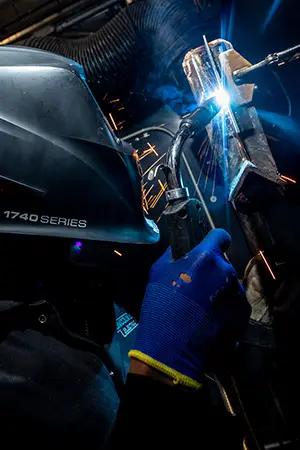
Machined parts often need extra work before they are ready for assembly. Deburring, polishing, grinding, heat treatment, anodizing, plating, coating, welding, and laser marking may all form part of a full-service order.
Coordinated secondary operations reduce the number of vendors a customer must manage. Providers listed under CNC services near me should explain whether finishing occurs in-house or through approved partners, along with how they protect dimensions during transport and processing.
Assembly, Packaging, and Delivery Support
Certain projects benefit from subassembly before shipment. Pressed inserts, bearings, fasteners, seals, and related hardware can be installed and checked so components arrive closer to their final use.
Protective packaging prevents scratches, corrosion, mixed revisions, and damage to precision surfaces. Companies comparing machining companies near me should also review labeling, lot control, shipment tracking, and delivery planning instead of focusing only on machine time.
Production Planning and Repeat-Order Control
Ongoing support continues after the first batch ships. Stored programs, fixture records, tool lists, setup notes, and inspection plans help machining services near me reproduce approved parts without relying on memory.
Scheduling data can reveal capacity limits, outside-processing lead times, material risks, and staffing gaps before they interrupt a repeat order or a planned increase in overall production volume. Clear revision control prevents outdated drawings from reaching the shop floor. Amtec Solutions Group supports manufacturers that need coordinated precision machining, automation knowledge, inspection, and production planning, giving complex parts a more controlled path from design review through final delivery.


